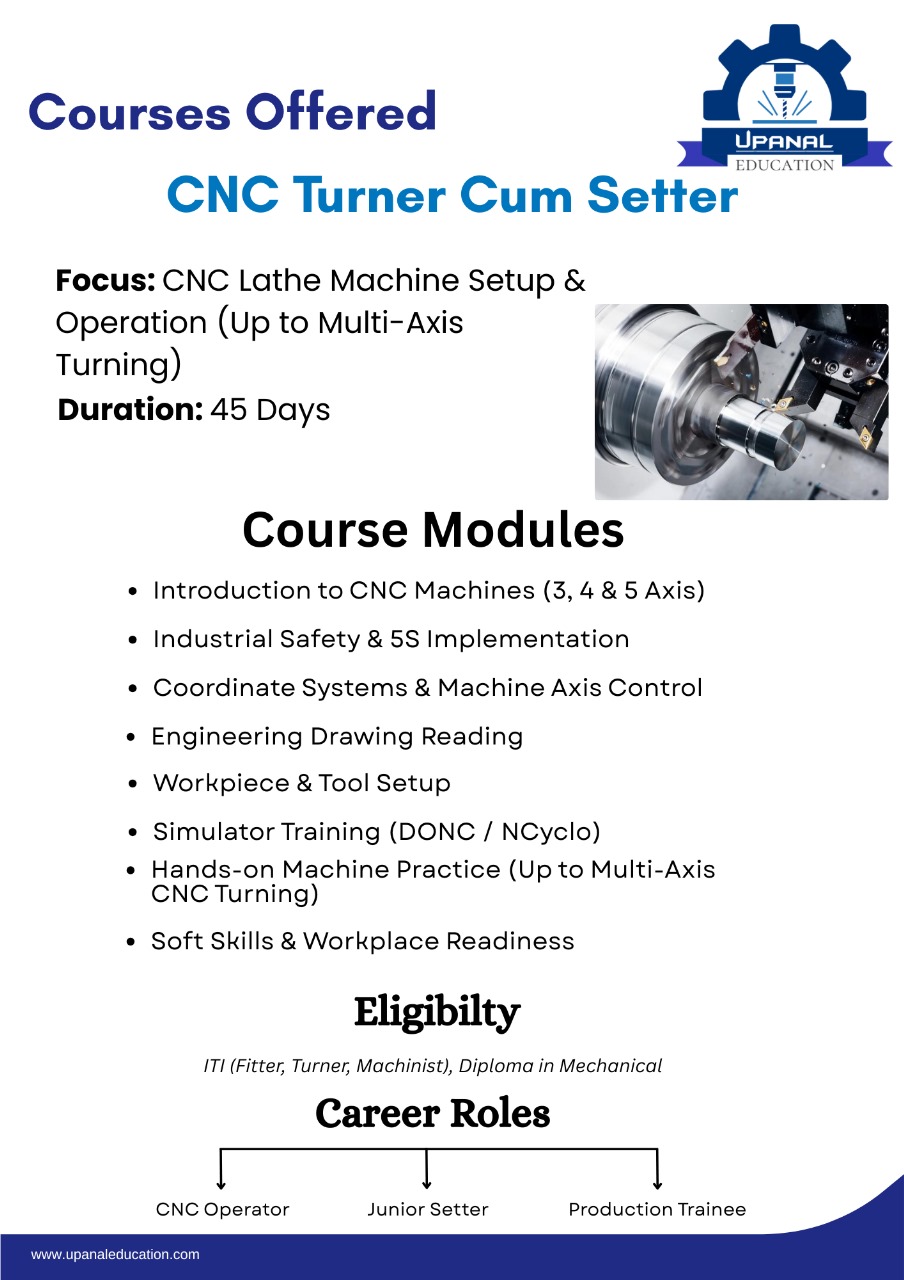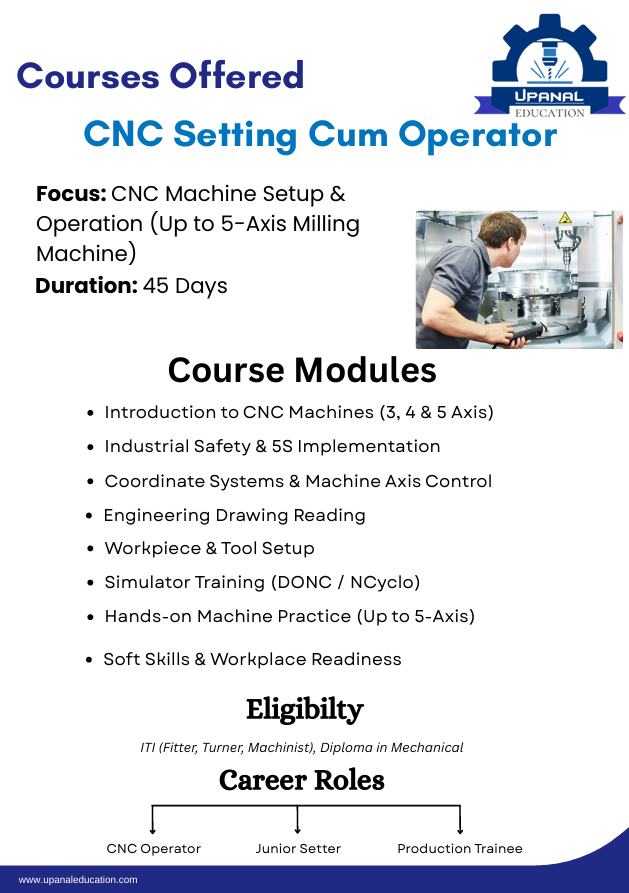
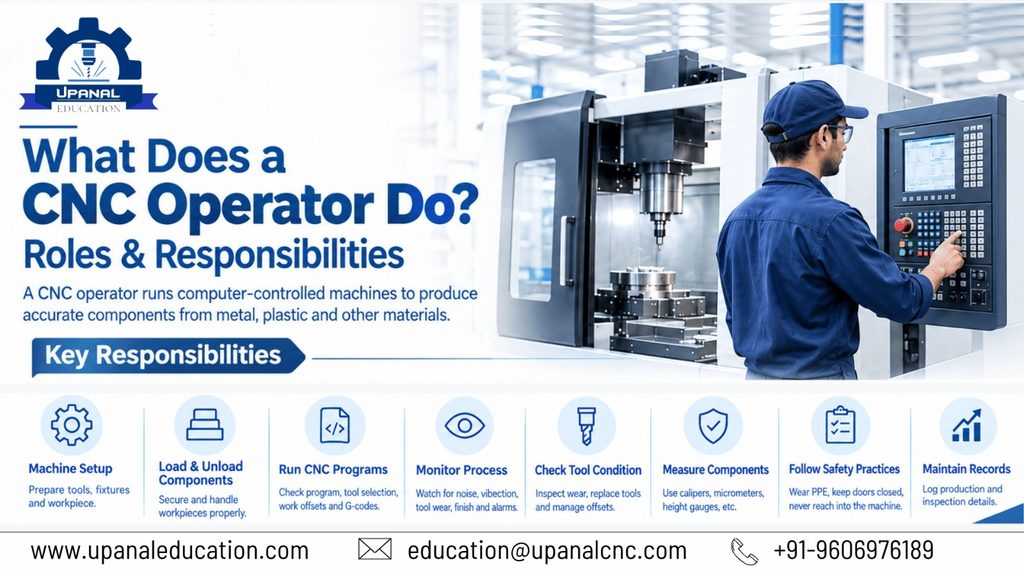
A CNC operator plays an important role in modern manufacturing. CNC operators run computer-controlled machines to produce accurate components from materials such as metal, plastic, and other engineering materials. They follow CNC programs, set up tools, check components, and make sure the machine works safely.
Therefore, CNC operator jobs require both technical knowledge and practical machine skills. With proper training, beginners can build a strong career in CNC machining and manufacturing.
What Is a CNC Operator?
A CNC operator is a skilled professional who operates Computer Numerical Control (CNC) machines. The operator loads the workpiece, checks the tools, runs the CNC program, and monitors the machining process.
CNC operators may work with different machines, including:
- CNC Turning Machines
- VMC Machines
- HMC Machines
- CNC Milling Machines
- CNC Grinding Machines
- CNC Cutting Machines
The exact responsibilities depend on the machine type, company, and production requirements.
Main Roles of a CNC Operator
1. Setting Up the CNC Machine
Machine setup is one of the main responsibilities of a CNC operator. The operator prepares the machine before production starts.
This may include:
- Loading the required tools
- Installing the workholding fixture
- Mounting the workpiece
- Checking tool positions
- Setting work offsets
- Verifying machine parameters
A proper setup helps achieve accurate and consistent machining.
2. Loading and Unloading Components
The operator loads raw material into the machine and removes finished components after machining.
For example, a CNC turning operator may load a metal bar or component into the chuck. Similarly, a VMC operator may secure a workpiece on a fixture.
The operator must ensure that the component is properly clamped before starting the machine.
3. Running CNC Programs
CNC operators run programs that control the machine’s movements and machining operations.
Before running a program, the operator checks the program number, tool selection, work offset, and other important settings.
Therefore, basic knowledge of G-codes and M-codes can help operators understand CNC programs and identify potential problems.
4. Monitoring the Machining Process
A CNC operator must continuously monitor the machining process.
The operator checks for:
- Unusual machine sounds
- Tool wear
- Excessive vibration
- Poor surface finish
- Coolant problems
- Machine alarms
If a problem occurs, the operator should stop the machine safely and inform the responsible technician, programmer, or supervisor when required.
5. Checking Tool Condition
Cutting tools become worn during machining. Excessive tool wear can affect component accuracy and surface finish.
Therefore, CNC operators inspect tools regularly and replace them when necessary.
They may also monitor tool offsets and wear values according to the company’s production procedure.
6. Measuring Finished Components
Quality inspection is another important CNC operator responsibility.
Operators may use measuring instruments such as:
- Vernier Calipers
- Micrometers
- Height Gauges
- Bore Gauges
- Dial Indicators
They compare the measured dimensions with the engineering drawing or inspection requirements.
As a result, operators can identify dimensional problems before producing a large batch of components.
CNC Operator Responsibilities
A CNC operator may perform several responsibilities during a normal production shift.
Daily Responsibilities
- Check the CNC machine before operation.
- Review the production drawing and instructions.
- Prepare tools and fixtures.
- Load the workpiece correctly.
- Set or verify work offsets.
- Run the approved CNC program.
- Monitor machining operations.
- Inspect finished components.
- Record production and inspection details.
- Maintain a clean and safe work area.
These responsibilities help maintain production quality and reduce machine downtime.
CNC Operator vs CNC Programmer
A CNC operator mainly focuses on machine setup, operation, monitoring, and inspection. A CNC programmer creates or modifies CNC programs and develops machining strategies.
However, the roles can overlap in some manufacturing companies. Experienced operators may also understand CNC programming, tool offsets, and basic program editing.
Therefore, learning both CNC operation and programming can provide additional career opportunities.
| CNC Operator | CNC Programmer |
|---|---|
| Operates CNC machines | Creates CNC programs |
| Loads tools and workpieces | Develops machining strategies |
| Monitors machining | Generates and edits programs |
| Checks component dimensions | Selects toolpaths and cutting conditions |
| Handles basic machine setup | Handles CNC programming and process planning |
Skills Required to Become a CNC Operator
A successful CNC operator needs practical and technical skills.
Important Skills
- CNC machine operation
- Engineering drawing reading
- Basic G-code and M-code knowledge
- Tool identification
- Workholding knowledge
- Measuring instruments
- Basic machining knowledge
- Quality inspection
- Machine safety
- Problem-solving
Moreover, good attention to detail is important because small errors can affect component quality.
Importance of Safety for CNC Operators
CNC machines contain moving parts, rotating tools, and cutting equipment. Therefore, operators must follow workplace safety procedures at all times.
Important safety practices include:
- Wear required personal protective equipment.
- Check that the workpiece is securely clamped.
- Keep the machine door closed during machining.
- Never reach into a moving machine.
- Check tools and offsets before operation.
- Follow machine operating instructions.
- Stop the machine if an unsafe condition occurs.
Safety should always come before production speed.
Career Opportunities for CNC Operators
CNC operation can provide a starting point for a career in manufacturing. With experience and additional training, operators can move into more advanced technical roles.
Possible career paths include:
CNC Operator → Senior CNC Operator → CNC Programmer → CAM Programmer → Production Engineer
Other career options include:
- VMC Programmer
- CNC Turning Programmer
- Machine Setter
- CNC Production Technician
- Manufacturing Technician
- Quality Inspector
Learning CAD, CAM, and CNC programming can further improve career growth.
How to Become a CNC Operator
Students and beginners can follow a simple learning path.
Step 1: Learn CNC Fundamentals
Understand machine axes, machine components, cutting tools, and basic machining operations.
Step 2: Learn Engineering Drawings
Practice reading dimensions, tolerances, sections, and machining symbols.
Step 3: Learn CNC Operation
Understand machine setup, workholding, tool setting, offsets, and basic CNC controls.
Step 4: Gain Practical Experience
Work on actual CNC machines under proper supervision and follow safe operating procedures.
Step 5: Develop Programming Skills
Learn basic G-codes, M-codes, CNC programming, and eventually CAM software.
This combination of knowledge can help you become an industry-ready CNC professional.
Conclusion
A CNC operator is responsible for safely operating CNC machines and maintaining consistent production quality. The role includes machine setup, tool handling, program operation, process monitoring, and component inspection.
Therefore, CNC operator skills are valuable for anyone planning a career in the manufacturing industry. With practical experience and additional knowledge of CNC programming, CAD, and CAM, operators can progress toward advanced technical and programming roles.