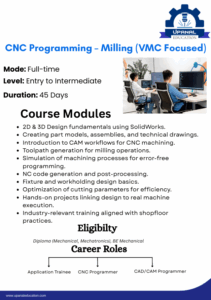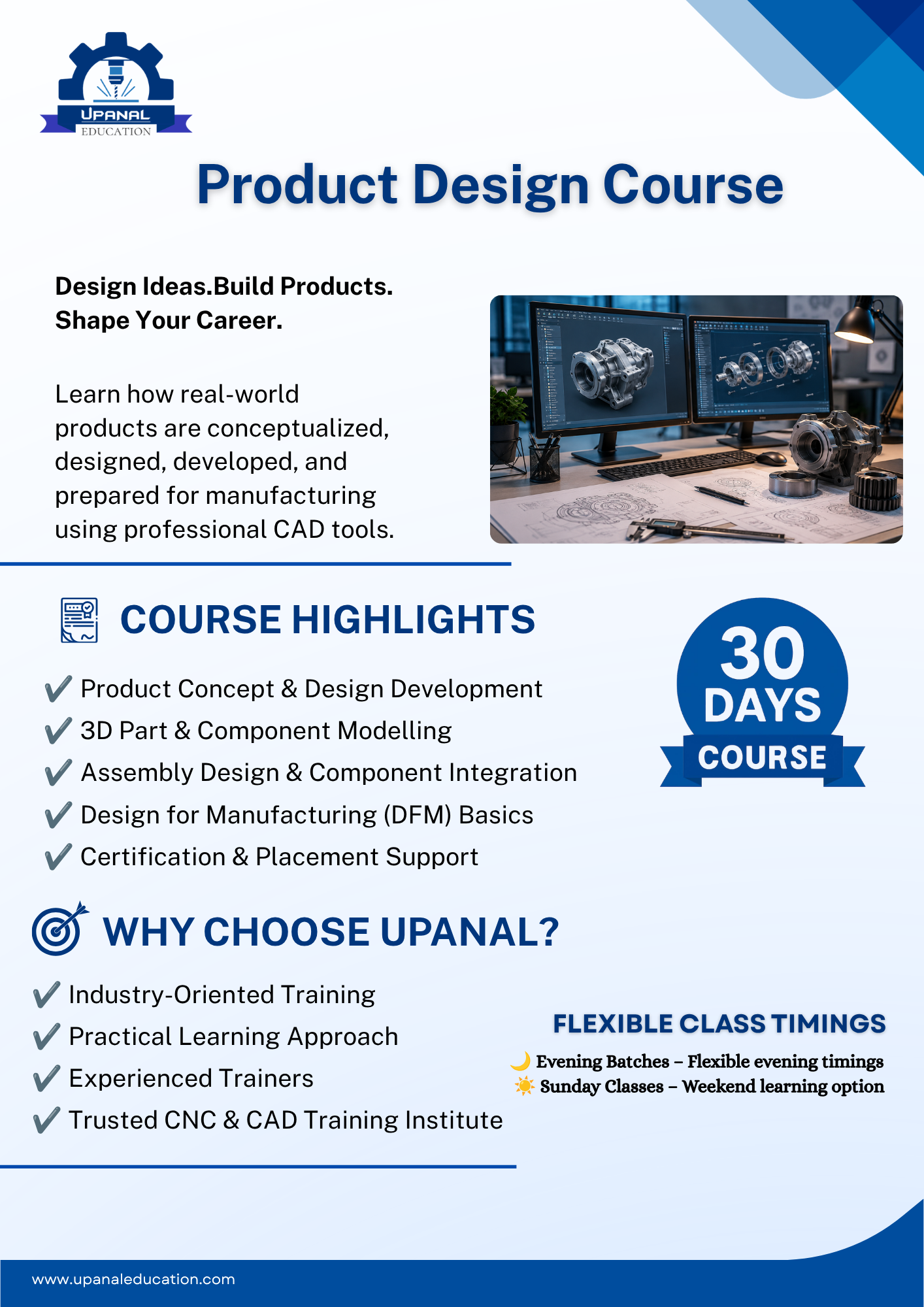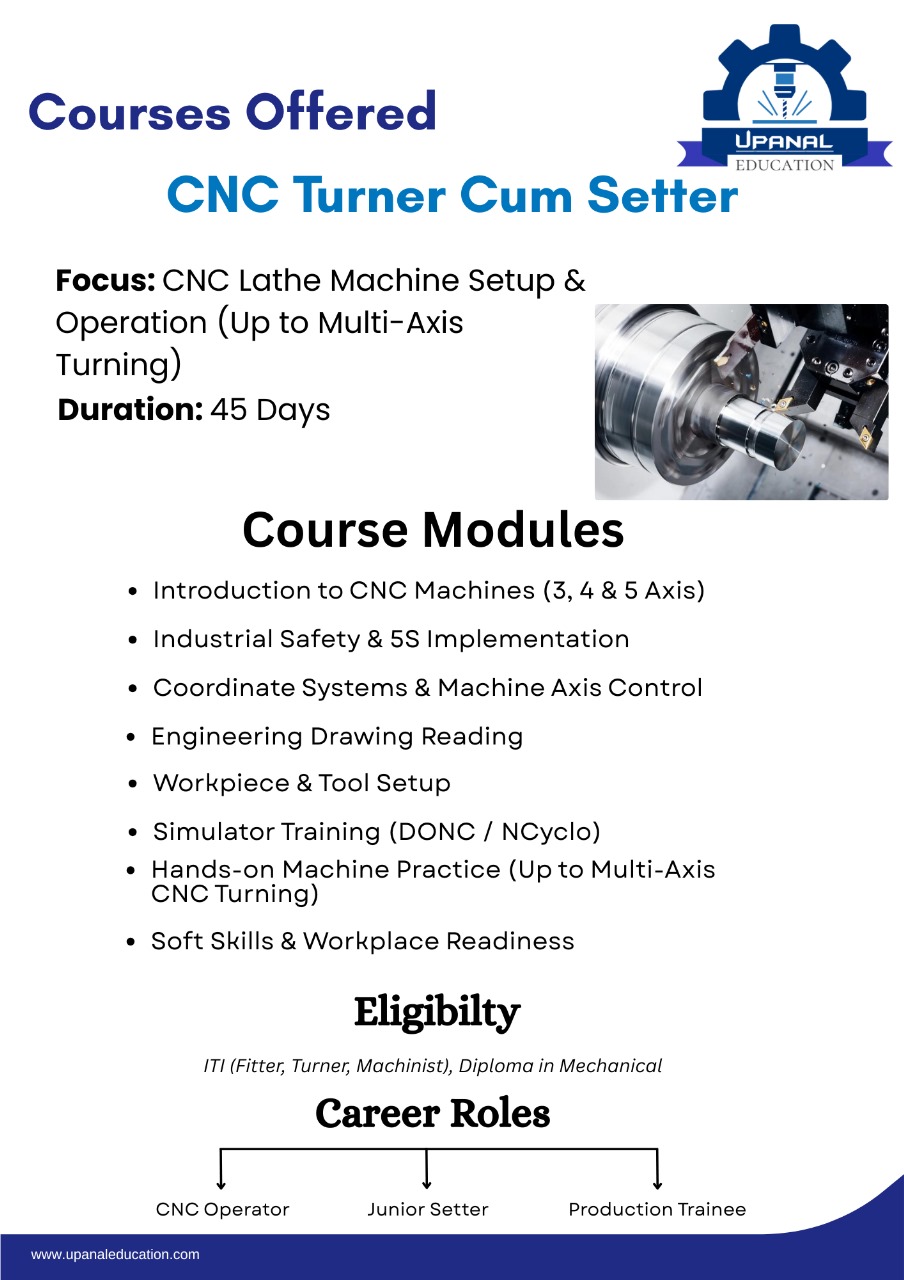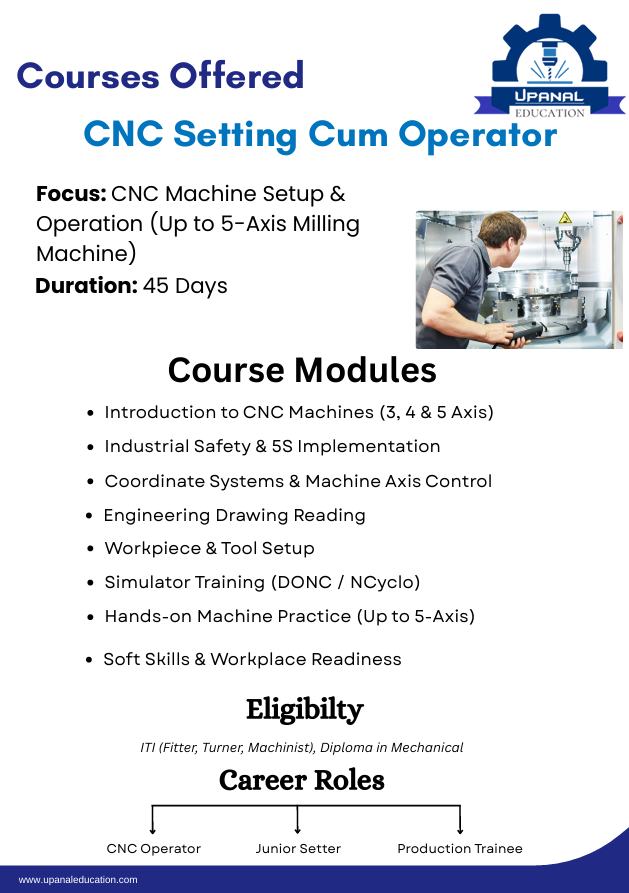
The CNC machining industry offers excellent career opportunities for mechanical students and professionals. Today, industries require skilled CNC operators, programmers, and engineers. Therefore, learning CNC machining can help students build a successful career.
Moreover, CNC technology continues to grow with automation and smart manufacturing. As a result, the demand for skilled professionals is increasing every year.
What is CNC Machining?
CNC machining is a manufacturing process controlled by computers. CNC machines perform cutting, drilling, milling, and turning operations with high accuracy.
Therefore, industries use CNC machining for fast and precise production.
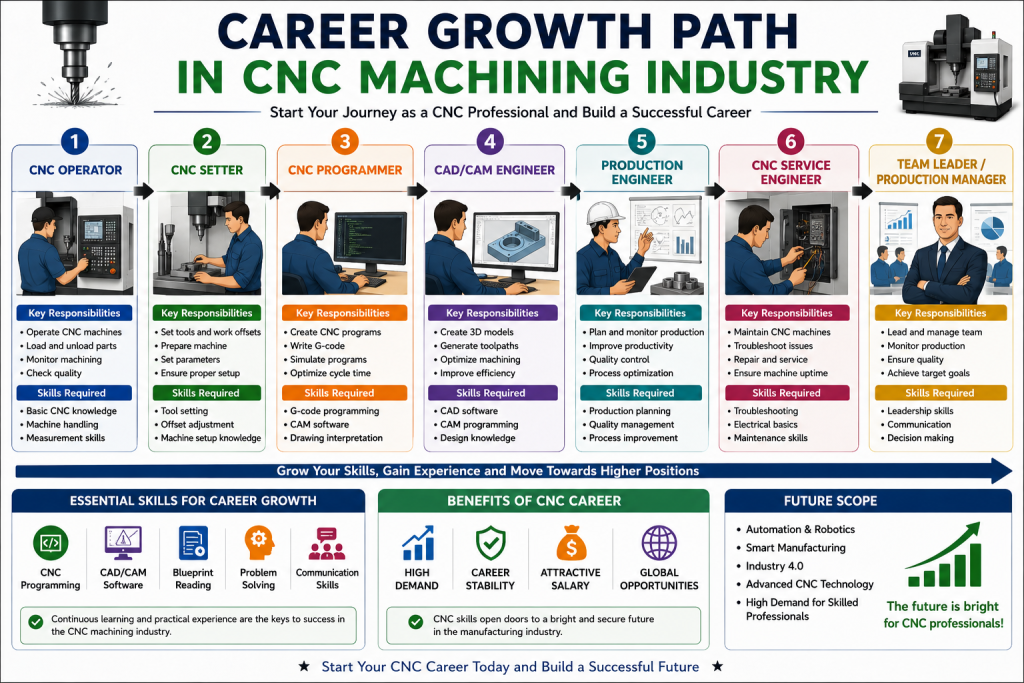
Career Growth Path in CNC Machining
1. CNC Operator
Most beginners start as CNC operators. Operators load materials, monitor machining, and check finished parts.
Skills Required
- Basic CNC knowledge
- Machine handling
- Measurement skills
Career Benefit
This role helps beginners understand machine operations.
2. CNC Setter
After gaining experience, operators become CNC setters. Setters prepare machines for production.
They set tools, work offsets, and machine parameters. In addition, they ensure proper machine setup.
Skills Required
- Tool setting
- Offset adjustment
- Machine setup knowledge
3. CNC Programmer
CNC programmers create machining programs using G-codes and CAM software.
Therefore, this role requires strong programming knowledge.
Skills Required
- G-code programming
- CAM software knowledge
- Drawing interpretation
Career Benefit
Programmers receive better salary opportunities.
4. CAD/CAM Engineer
CAD/CAM engineers create designs and generate CNC toolpaths.
Moreover, they improve manufacturing efficiency and machining accuracy.
Skills Required
- CAD software
- CAM programming
- Design knowledge
5. Production Engineer
Production engineers manage machining processes and production planning.
As a result, they improve productivity and reduce machining time.
Responsibilities
- Production planning
- Quality control
- Process optimization
6. CNC Service Engineer
Service engineers maintain and repair CNC machines.
Therefore, industries need skilled service professionals for machine maintenance.
Skills Required
- Troubleshooting
- Electrical basics
- CNC machine maintenance
7. Team Leader or Production Manager
Experienced professionals can move into management roles.
They manage teams, monitor production, and improve manufacturing operations.
Responsibilities
- Team management
- Production monitoring
- Quality improvement
Skills Needed for Career Growth
To grow in the CNC machining industry, students should develop important technical skills.
Important Skills
- CNC programming
- CAD/CAM software
- Blueprint reading
- Problem-solving
- Communication skills
Moreover, continuous learning helps professionals stay updated with modern technology.
Future Scope of CNC Industry
The future of CNC machining is strong. Industries are adopting automation, robotics, and smart manufacturing systems.
Therefore, skilled CNC professionals will continue to have high demand in the future.
Benefits of Choosing CNC Career
High Demand
Manufacturing industries always need skilled CNC professionals.
Career Stability
CNC machining offers long-term career opportunities.
Salary Growth
Experienced professionals receive higher salaries.
Global Opportunities
CNC skills are valuable worldwide.
Conclusion
The CNC machining industry offers excellent career growth opportunities. Students can start as operators and grow into programmers, engineers, and managers.
Therefore, learning CNC machining, CAD/CAM, and programming skills is important for long-term career success.
With regular practice and technical knowledge, students can build a strong future in the manufacturing industry.