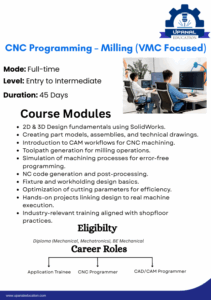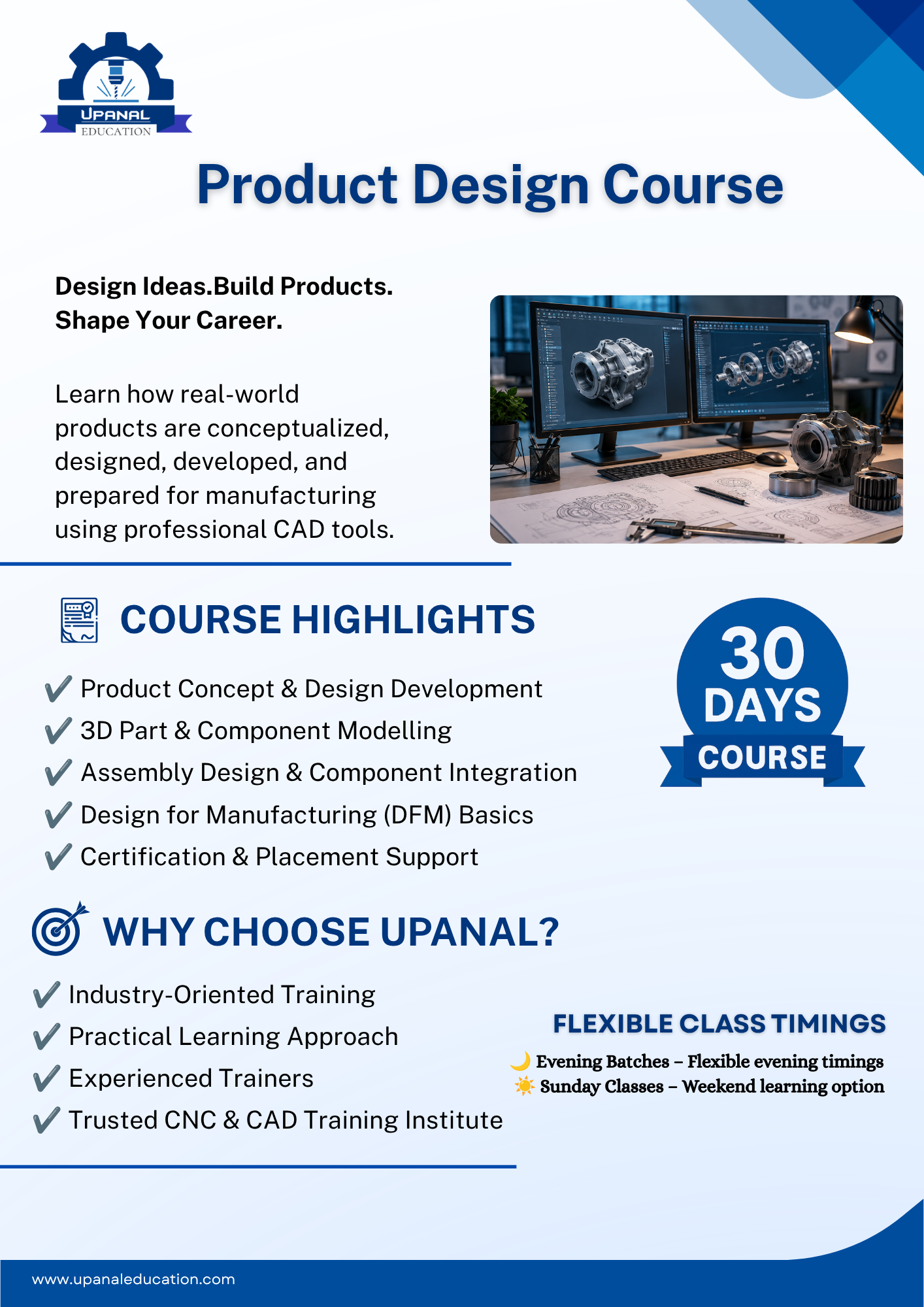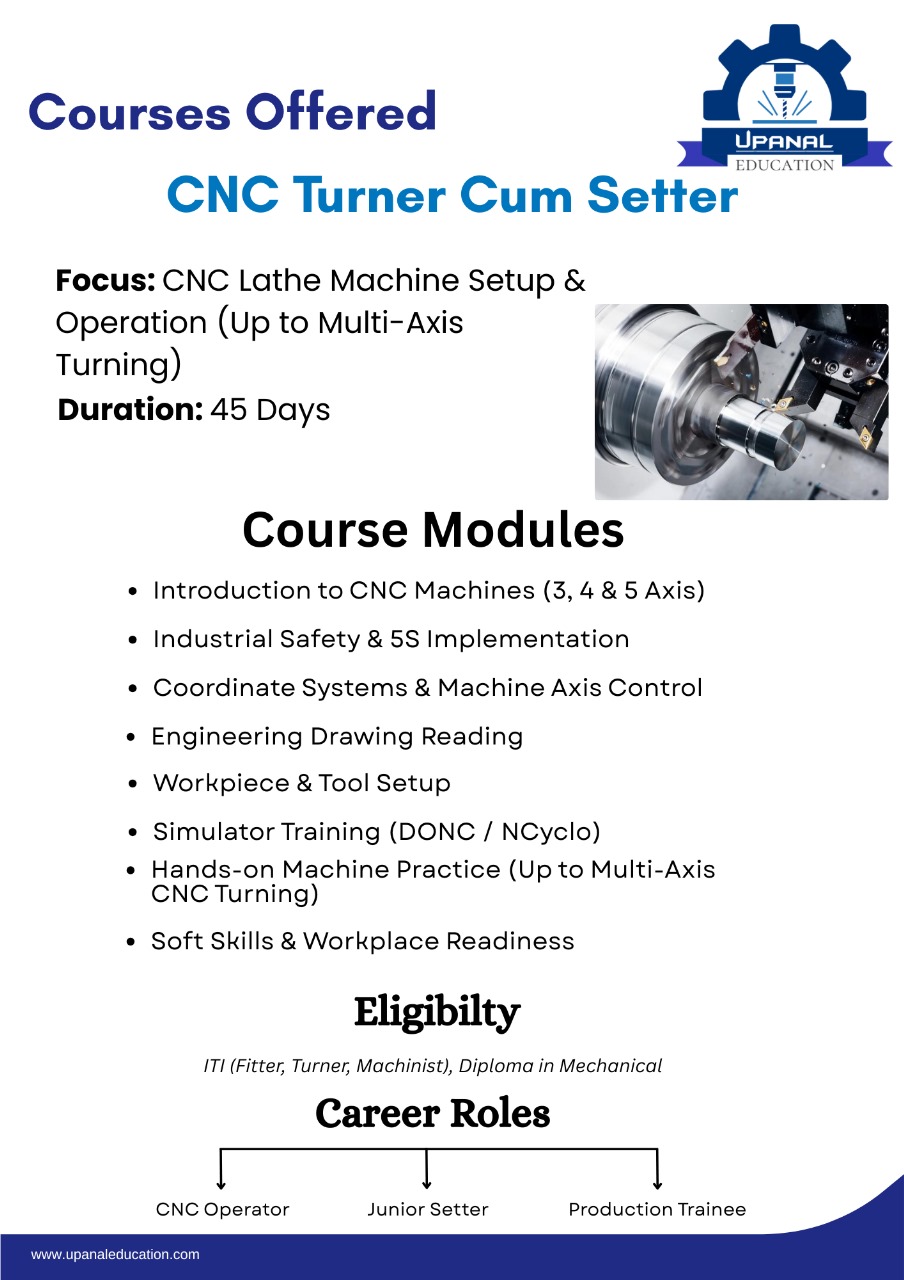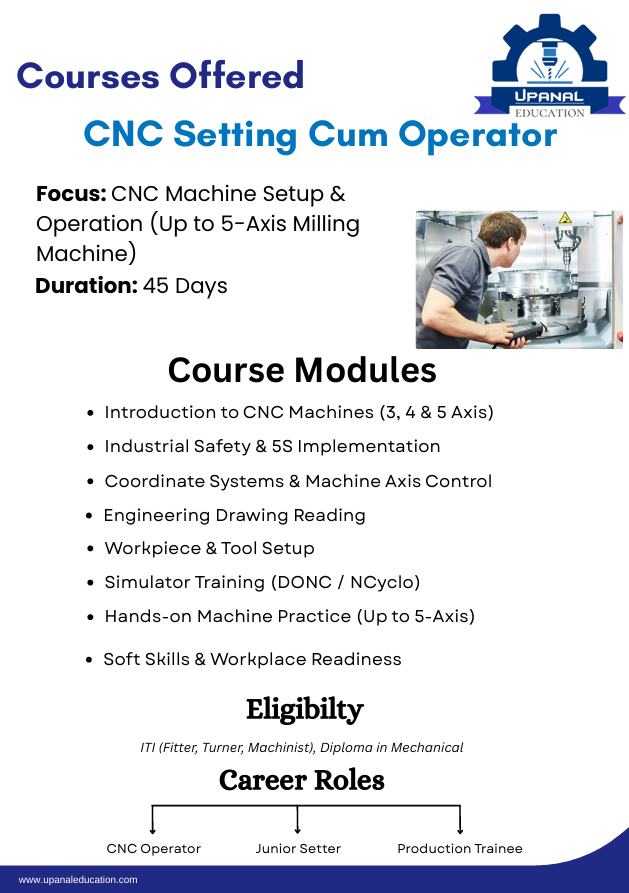
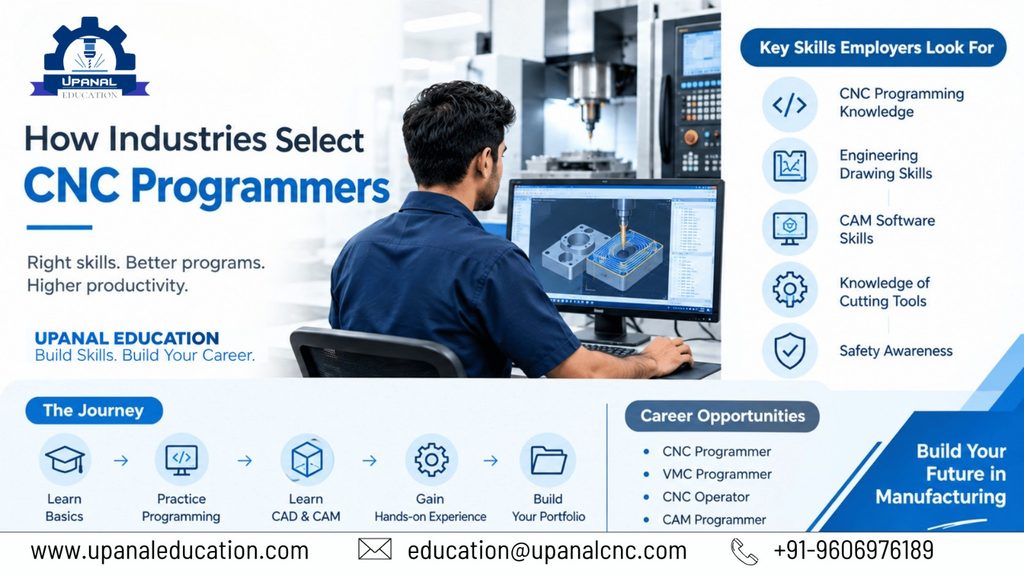
CNC programmers play an important role in modern manufacturing. They create and modify programs that control CNC machines and help produce accurate components. Therefore, industries carefully evaluate a candidate’s technical knowledge, practical skills, and understanding of machining before hiring a CNC programmer.
A good CNC programmer can improve production efficiency, reduce machining errors, and maintain consistent component quality. Moreover, companies look for programmers who can understand engineering drawings, select suitable cutting tools, and work with CAM software.
What Does a CNC Programmer Do?
A CNC programmer prepares machining programs for CNC machines such as VMC, CNC turning, HMC, and other machining centers.
Their responsibilities may include:
- Reading engineering drawings
- Creating CNC programs
- Selecting cutting tools
- Setting machining parameters
- Creating CAM toolpaths
- Checking work and tool offsets
- Simulating machining operations
- Testing and improving CNC programs
- Supporting CNC operators during production
Therefore, a CNC programmer needs both programming knowledge and practical machining skills.
1. Knowledge of CNC Programming
The first skill industries check is basic CNC programming knowledge. A programmer should understand G-codes, M-codes, coordinates, work offsets, tool offsets, and machining cycles.
For example, a programmer should know how to use common commands such as G00, G01, G02, G03, G54, M03, M05, M06, and M30.
Strong CNC programming knowledge helps programmers create safe and efficient machining programs.
2. Understanding of Engineering Drawings
CNC programmers must read engineering drawings correctly. A drawing provides important information about dimensions, tolerances, material, surface finish, and other manufacturing requirements.
Therefore, industries prefer candidates who can understand drawings without depending completely on others.
Important areas include:
- Dimensions and tolerances
- Section views
- Geometric tolerances
- Surface finish symbols
- Hole specifications
- Material specifications
3. CAM Software Skills
Modern manufacturing companies increasingly use CAM software to generate CNC toolpaths.
A CNC programmer with CAM knowledge can create efficient toolpaths, simulate machining, and generate machine-ready programs.
Moreover, knowledge of CAM software helps programmers work with complex components that are difficult to program manually.
4. Knowledge of Cutting Tools
Tool selection directly affects machining quality and productivity. Therefore, industries evaluate whether a CNC programmer understands different cutting tools and their applications.
A programmer should know about:
- End mills
- Face mills
- Drills
- Reamers
- Taps
- Ball nose cutters
- Inserts
The correct tool selection can improve surface finish, tool life, and machining time.
5. Understanding of Cutting Parameters
CNC programmers need to select suitable spindle speeds, feed rates, depths of cut, and step-over values.
Incorrect parameters can cause tool wear, poor surface finish, or damage to the workpiece.
Therefore, practical knowledge of cutting parameters is an important skill during CNC programmer selection.
6. Practical Machine Knowledge
Industries do not always look for programming knowledge alone. They also value candidates who understand how CNC machines operate.
A programmer should understand:
- Machine axes
- Workpiece setup
- Tool setting
- Work offsets
- Tool offsets
- Machine limitations
- Basic machine safety
As a result, programmers with practical machine knowledge can create more reliable programs.
7. Problem-Solving Skills
Manufacturing problems can occur during production. A CNC programmer should identify the cause and make suitable corrections.
For example, the programmer may need to solve issues related to:
- Incorrect dimensions
- Tool wear
- Poor surface finish
- Tool collisions
- Incorrect toolpaths
- Excessive machining time
Therefore, strong problem-solving skills are highly valuable in CNC programming jobs.
8. Quality Awareness
CNC programmers directly influence component accuracy. Industries therefore prefer candidates who understand quality requirements.
A programmer should know how machining conditions affect dimensions, tolerances, and surface finish.
Furthermore, knowledge of measuring instruments such as vernier calipers, micrometers, and height gauges can be useful.
9. Industry Experience
Experience helps CNC programmers handle real production challenges. However, freshers can also improve their chances by completing practical CNC and CAM projects.
For experienced candidates, companies may consider:
- Types of machines handled
- Components manufactured
- CAM software used
- Materials machined
- Programming experience
- Production responsibilities
10. Safety Knowledge
CNC programming must always consider machine and operator safety.
Before running a program, programmers should verify tool movements, work offsets, tool lengths, spindle speeds, and potential collision points.
Therefore, safety awareness is an important factor when industries select CNC programmers.
What Industries Look for in Freshers
Freshers may not have extensive industrial experience. However, they can demonstrate their skills through practical training and projects.
Companies often look for:
- Basic CNC programming knowledge
- Engineering drawing skills
- CAM software knowledge
- Cutting tool knowledge
- CNC machine fundamentals
- Problem-solving ability
- Willingness to learn
A strong practical project can also help a fresher demonstrate their capabilities during an interview.
How to Become an Industry-Ready CNC Programmer
To prepare for a CNC programming career, follow a structured learning path.
Step 1: Learn CNC Fundamentals
Understand machine axes, coordinates, tools, work offsets, and basic machining operations.
Step 2: Learn CNC Programming
Practice G-codes, M-codes, drilling cycles, milling operations, and turning cycles.
Step 3: Learn CAD
Understand how to read and create 2D drawings and 3D models.
Step 4: Learn CAM
Practice toolpath creation, machining simulation, and CNC program generation.
Step 5: Gain Practical Experience
Work on real components and understand machine setup, tooling, and inspection.
Step 6: Build a Portfolio
Include your CAD models, CAM projects, CNC programs, and machining projects in your portfolio.
Career Opportunities for CNC Programmers
After developing the required skills, professionals can explore several manufacturing roles:
- CNC Programmer
- VMC Programmer
- CNC Operator
- CAM Programmer
- CNC Production Engineer
- Manufacturing Engineer
- Process Engineer
- Tool and Die Programmer
Moreover, experienced CNC programmers can progress into senior programming, production planning, and manufacturing management roles.
Conclusion
Industries select CNC programmers based on a combination of technical knowledge, practical experience, problem-solving ability, and safety awareness. CNC programming knowledge is important, but understanding CAD, CAM, cutting tools, engineering drawings, and machining processes can provide an additional advantage.
Therefore, students and freshers should focus on practical learning instead of studying CNC codes alone. With consistent practice and industry-oriented training, aspiring CNC programmers can build strong careers in modern manufacturing.