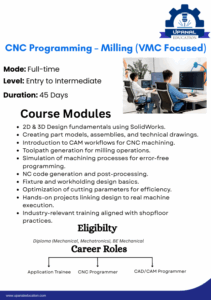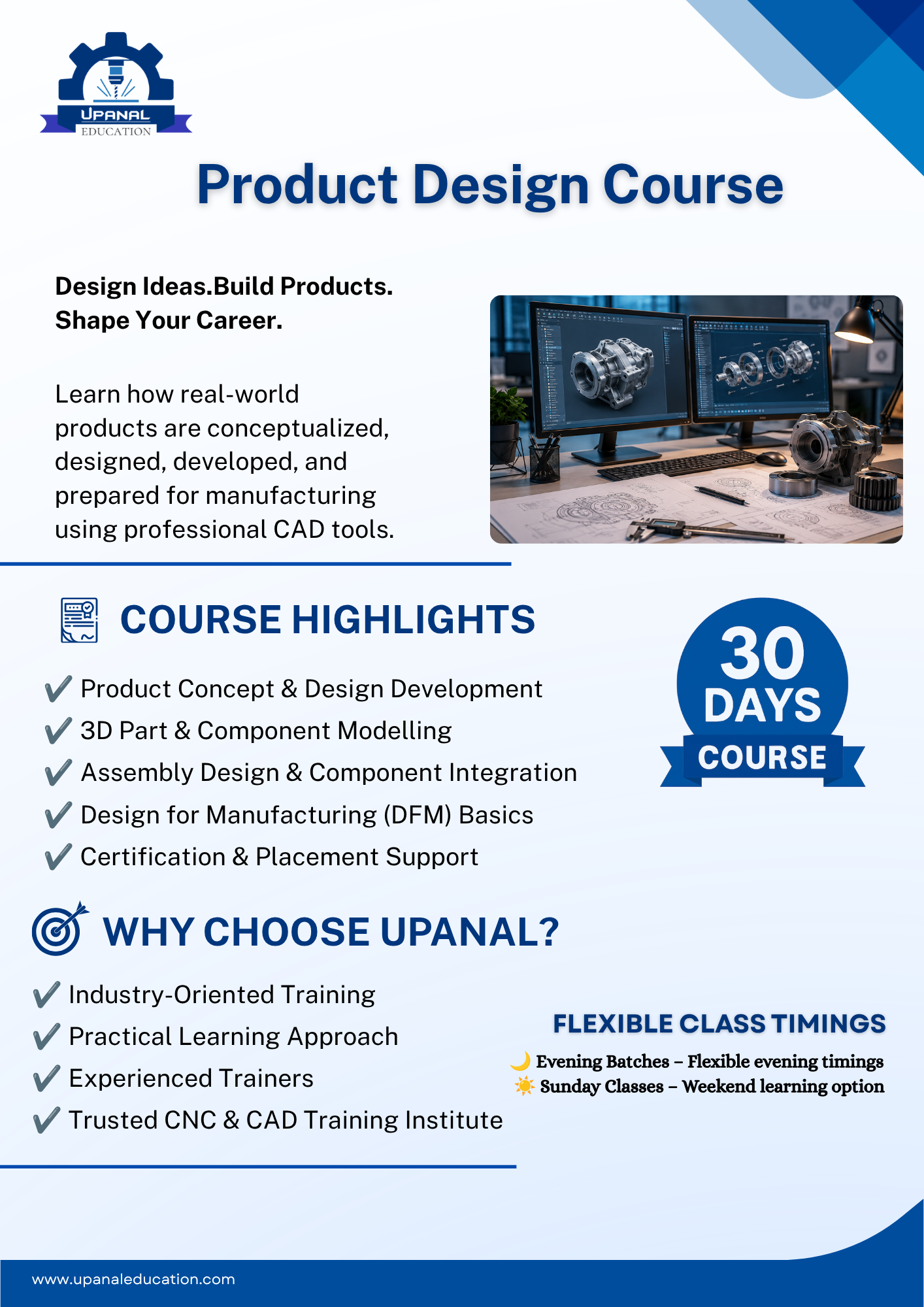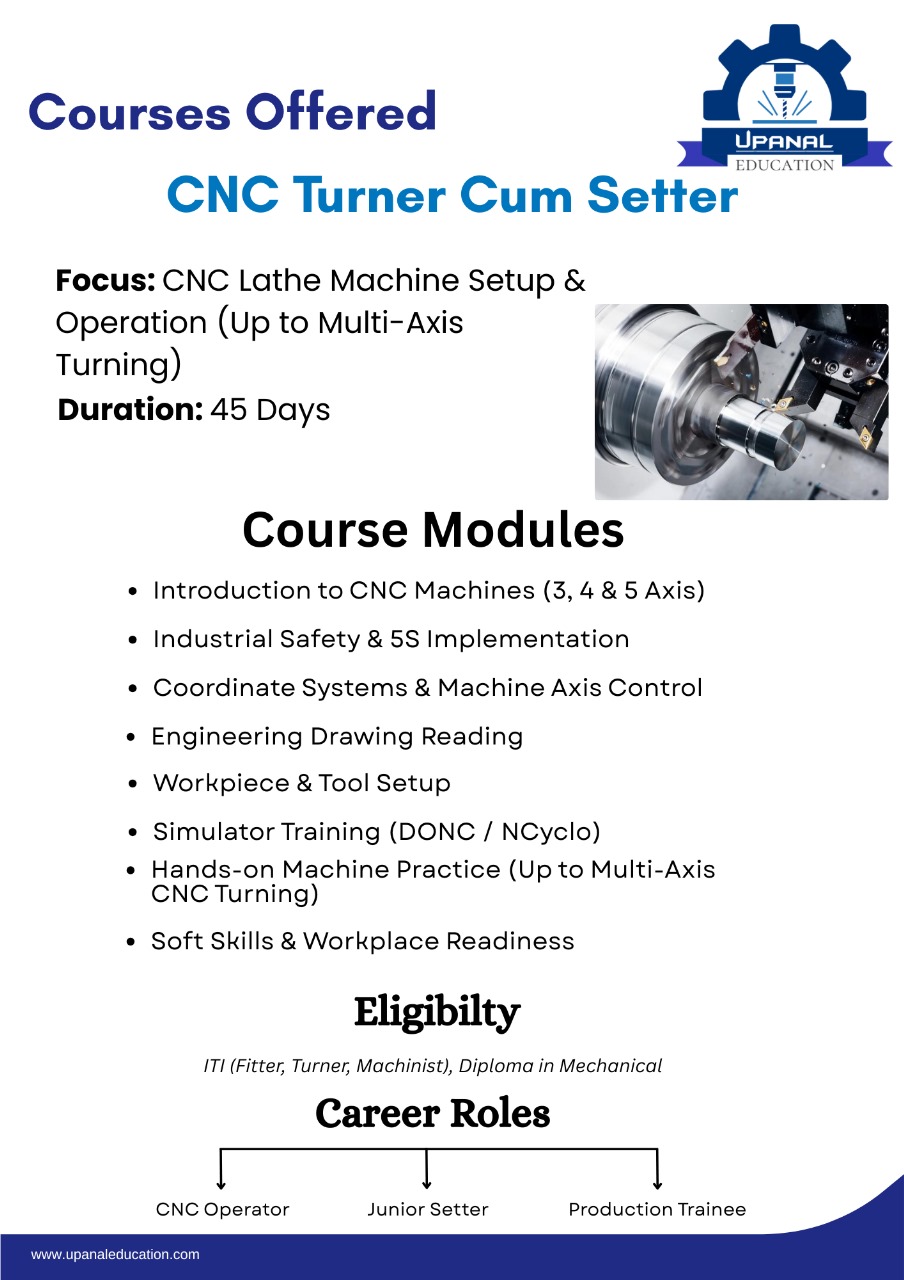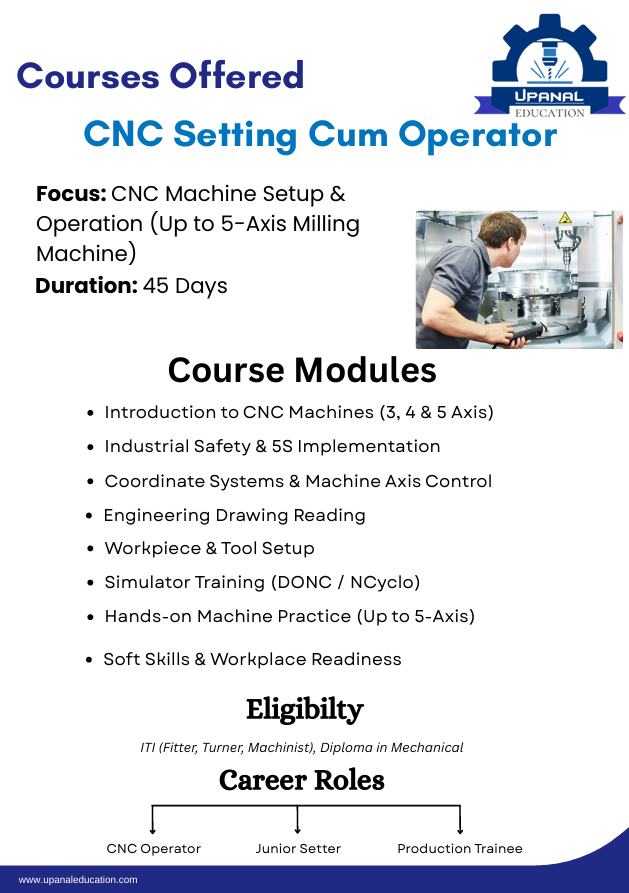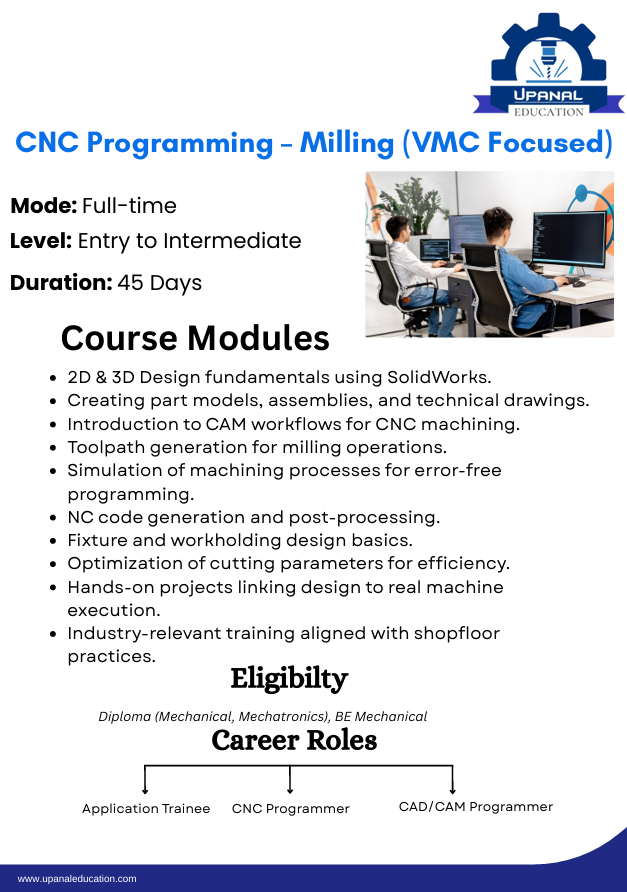
CNC machining is one of the important fields in the manufacturing industry. Many companies need skilled CNC operators, CNC programmers, and machine setters to manufacture precision components. Therefore, ITI and Diploma students can improve their job opportunities by learning practical CNC skills and gaining hands-on experience.
Students from Mechanical, Mechatronics, and related engineering backgrounds can build a career in CNC machining. However, having a qualification alone may not be enough. Employers also look for technical knowledge, machine operation skills, and the ability to work in an industrial environment.
In this blog, we will explain how ITI and Diploma students can prepare for CNC jobs, develop industry-relevant skills, and improve their chances of getting hired.
What Is a CNC Job?
A CNC job involves working with Computer Numerical Control machines that manufacture components using programmed instructions.
These machines perform operations such as milling, turning, drilling, and cutting. As a result, CNC technology helps industries produce accurate and consistent components.
Common CNC job roles include:
- CNC Operator
- VMC Operator
- CNC Setter
- CNC Programmer
- CAM Programmer
- CNC Production Technician
- CNC Machinist
Each role requires different levels of technical knowledge and practical experience.
Why CNC Skills Are Important for ITI and Diploma Students
CNC skills help students connect their classroom knowledge with real manufacturing work.
For example, students who understand engineering drawings can learn how to machine components to the required dimensions. Similarly, students who understand cutting tools can make better decisions during machining operations.
Moreover, practical CNC training helps students become familiar with machine controls, workholding, tool setting, and production processes.
Key Benefits of Learning CNC Skills
- Develop practical machining knowledge.
- Understand modern manufacturing technology.
- Improve technical confidence.
- Learn CNC programming fundamentals.
- Prepare for entry-level manufacturing jobs.
- Build a foundation for advanced CAD/CAM training.
10 Ways ITI and Diploma Students Can Get CNC Jobs Faster
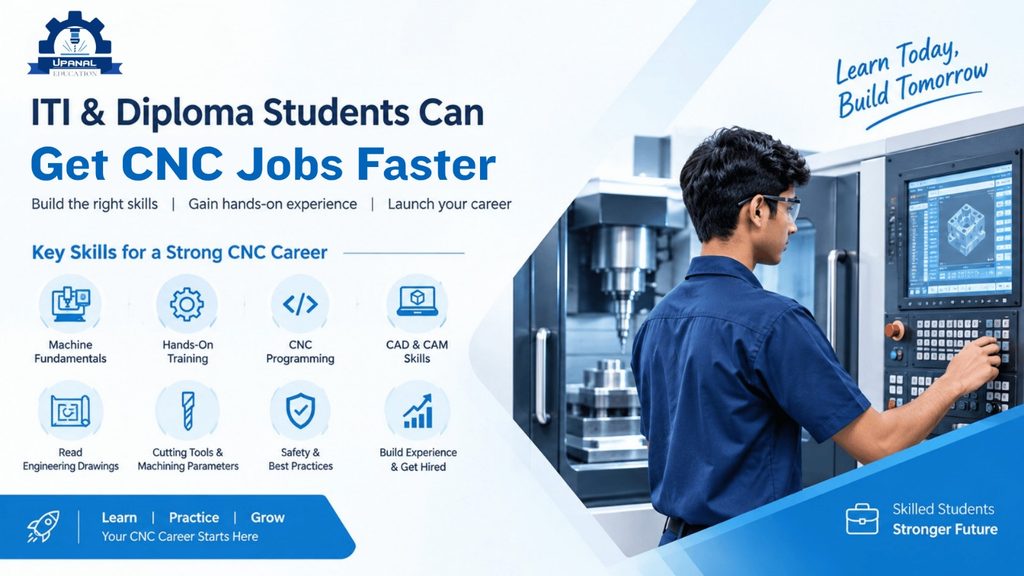
1. Learn CNC Machine Fundamentals
Start by understanding how CNC machines work. Learn about machine axes, spindle functions, cutting tools, and basic machining operations.
In addition, become familiar with different CNC machines, such as VMCs and CNC turning machines.
This knowledge helps you understand the machining process before moving to advanced programming.
2. Get Hands-On CNC Machine Training
Practical training is one of the most useful ways to prepare for CNC jobs.
During training, practice machine setup, workpiece loading, tool setting, and basic machine operation under proper supervision.
Furthermore, working with real machines helps you understand the challenges of industrial machining.
3. Learn CNC Programming
CNC programming helps you understand how machines follow instructions to manufacture components.
Start with basic G-codes and M-codes. Then, learn coordinate systems, work offsets, tool offsets, and simple machining cycles.
For example, understanding G00, G01, G02, and G03 helps you learn basic CNC tool movements.
As your knowledge improves, practice writing and checking simple CNC programs.
4. Develop CAD and CAM Skills
CAD and CAM skills can expand your career options in manufacturing.
CAD software helps you create engineering drawings and 3D models. Meanwhile, CAM software helps you generate toolpaths and prepare CNC machining programs.
Popular software includes:
- SolidWorks
- AutoCAD
- CATIA
- PTC Creo
- SolidCAM
- Mastercam
- Siemens NX CAM
Therefore, learning CAD/CAM alongside CNC machining can help you prepare for programming and manufacturing roles.
5. Learn to Read Engineering Drawings
Engineering drawings provide the dimensions and specifications needed to manufacture components.
A CNC professional should understand:
- Linear and angular dimensions
- Tolerances
- Orthographic views
- Section views
- Surface finish symbols
- Hole dimensions
Moreover, drawing interpretation helps you identify machining requirements before production begins.
6. Understand Cutting Tools and Machining Parameters
Cutting tools play a major role in machining quality and productivity.
Learn about end mills, face mills, drills, inserts, and other common tools. Also, understand spindle speed, feed rate, and depth of cut.
Correct tool selection and suitable machining parameters help improve surface finish and tool life.
7. Build Practical Projects
Practical projects allow you to demonstrate your skills to employers.
Instead of learning only theory, try designing and machining simple components such as brackets, shafts, plates, and fixtures.
For each project, document the following:
- Component drawing
- Material selection
- Tool selection
- CNC program
- Machining process
- Final inspection results
As a result, you can show employers what you have learned during training.
8. Prepare a Professional Resume
A clear resume helps employers understand your qualifications and technical skills.
Include the following information:
- ITI or Diploma qualification
- CNC training details
- Machine operation experience
- CNC programming knowledge
- CAD/CAM software skills
- Practical projects
- Internship or industrial experience
Furthermore, mention the machines and software you have actually used. This helps employers assess your suitability for a particular role.
9. Prepare for CNC Job Interviews
Employers may ask questions about machine operation, programming, tooling, and safety.
Therefore, revise your technical fundamentals before attending an interview.
Common interview topics include:
- Difference between CNC and conventional machines
- Basic G-codes and M-codes
- VMC machine components
- Tool offsets and work offsets
- Cutting tools and machining parameters
- Engineering drawing interpretation
- CNC machine safety
In addition, practice explaining your training projects clearly.
10. Apply for Relevant CNC Job Opportunities
Once you have developed your skills, start applying for suitable entry-level positions.
Look for opportunities through:
- Manufacturing company career pages
- Job portals
- Campus placement programs
- Industrial training institutes
- CNC training centers
- Professional networks
You can also contact local manufacturing companies to ask about trainee positions and entry-level openings.
However, make sure the job matches your current skills and offers opportunities to learn.
CNC Job Roles for ITI and Diploma Students
Different qualifications and skill levels may lead to different entry-level opportunities.
| Job Role | Main Responsibility |
| CNC Operator | Operates CNC machines and monitors machining |
| VMC Operator | Runs vertical machining centers |
| CNC Setter | Prepares tools, fixtures, and machine settings |
| CNC Programmer Trainee | Learns and prepares CNC programs under supervision |
| CNC Machinist | Manufactures components and checks dimensions |
| CAM Programmer Trainee | Learns toolpath creation and CNC program generation |
The exact requirements vary by employer, machine type, and production environment.
Skills Employers Look for in CNC Freshers
Companies often evaluate candidates based on their technical knowledge and readiness to work in a manufacturing environment.
Important Skills
Technical Skills
- CNC machine fundamentals
- Basic CNC programming
- Engineering drawing reading
- Tool identification
- Measuring instrument knowledge
- Basic CAD/CAM skills
Workplace Skills
- Attention to detail
- Problem-solving
- Communication
- Teamwork
- Safety awareness
- Willingness to learn
Moreover, candidates who can explain their practical training clearly may find it easier to demonstrate their abilities during interviews.
Common Mistakes CNC Job Seekers Should Avoid
Some beginners focus only on completing a course without developing practical skills.
To improve your job preparation, avoid these common mistakes:
- Learning CNC codes without understanding machining.
- Ignoring engineering drawing interpretation.
- Skipping practical machine training.
- Listing software skills without actual practice.
- Applying for jobs without checking the requirements.
- Ignoring workplace safety.
- Attending interviews without technical preparation.
Instead, focus on building a strong foundation and improving your practical knowledge.
A Simple 90-Day CNC Job Preparation Plan
Students can follow a structured learning plan to prepare for entry-level CNC opportunities.
Days 1–30
Learn the fundamentals
- Understand CNC machine components.
- Practice engineering drawing reading.
- Learn basic G-codes and M-codes.
- Identify common cutting tools.
Days 31–60
Develop practical skills
- Practice machine setup under supervision.
- Learn work offsets and tool offsets.
- Perform basic machining operations.
- Start learning CAD/CAM software.
Days 61–90
Prepare for job applications
- Complete practical projects.
- Prepare a technical resume.
- Revise CNC interview questions.
- Apply for relevant trainee and entry-level jobs.
This is a suggested learning plan. Actual progress depends on training access, practice time, and individual experience.
How CAD/CAM Training Can Help Students Get CNC Jobs
CAD/CAM training can help ITI and Diploma students develop skills that support modern manufacturing.
Through practical training, students can learn how to create 3D models, generate machining toolpaths, and understand CNC production workflows.
Furthermore, training that includes real machines, simulators, and practical projects can help students connect software knowledge with industrial applications.
Therefore, students should look for training programs that match their career goals and provide sufficient practical experience.
Conclusion
ITI and Diploma students can improve their chances of getting CNC jobs by developing practical machine skills, learning CNC programming, and understanding engineering drawings.
Moreover, CAD/CAM knowledge, practical projects, and interview preparation can help students demonstrate their abilities to employers.
The key is to focus on both technical knowledge and hands-on learning. With consistent practice and suitable job preparation, students can work toward entry-level opportunities in CNC machining and build a foundation for long-term career growth.